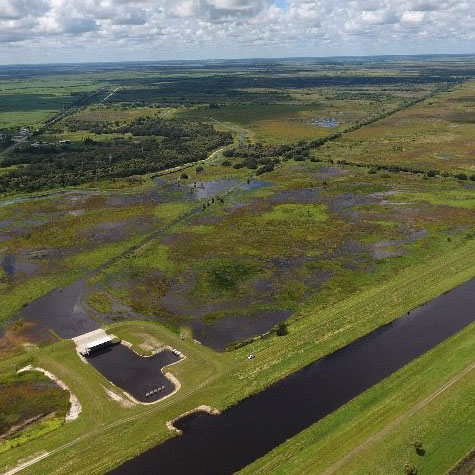
The Nicodemus Slough project is a 15,858-acre dispersed water storage initiative on Lykes Ranch that helps protect Lake Okeechobee and Florida’s coastal estuaries. Operating since 2015, the project stores excess surface water during high-water periods and can return it to the system when needed—reducing harmful discharges, improving water quality, and rehydrating valuable wetland habitat.
When water levels are high, additional storage is needed to hold excess surface water across the greater Everglades system. Dispersed water storage projects help reduce the volume of water delivered into Lake Okeechobee during the wet season—water that would otherwise be discharged to coastal estuaries for flood control.

Photo by Carlton Ward, Jr.
The project encompasses 15,858 acres in eastern Glades County in Central South Florida, immediately west of Lake Okeechobee and approximately six miles northwest of Moore Haven. Fisheating Creek meanders along the northern boundary but remains separated from the project by a series of dikes and canals. The site connects to Lake Okeechobee via the S-282 Culvert and to the Caloosahatchee River via the C-19 Extension Canal.
When Lake Okeechobee levels are high, water is pumped from the lake’s rim canal west to the highest elevation of the project site. The water then moves in sheetflow eastward across the site through a series of basins.
The project’s objectives include reducing high stages in the lake, minimizing harmful freshwater discharges to coastal estuaries, improving water quality by reducing phosphorus loads, and rehydrating wetlands that enhance plant and wildlife habitat. During dry periods, the project can return stored water to Lake Okeechobee or the Caloosahatchee River as needed.
Since operations began in 2015, Nicodemus Slough has reduced stormwater discharges to Lake Okeechobee and the estuaries by an average of 20,000 acre-feet per year while reducing the phosphorus load by an average of 2.35 metric tons per year.
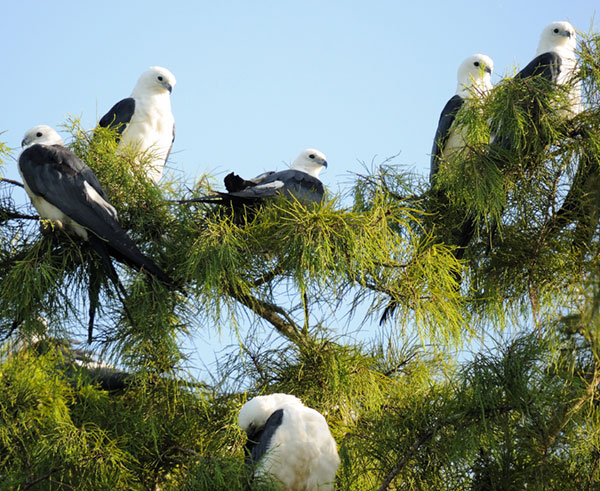
While these projects are designed for water quality and storage benefits, the resulting landscape is conducive to wading birds and other wildlife.
Swallow-tailed Kite roosting in Nicodemus Slough